Behaviour at brambles
Pupils behaviour in school is exemplary
Ofsted 2023
At Brambles Primary Academy, we believe that positive behaviour is built through strong relationships, clear expectations and consistent support.
Our aim is to create a climate where everyone succeeds, belongs and thrives. We want every child to feel safe, valued and respected, while understanding the importance of making positive choices and taking responsibility for their behaviour.
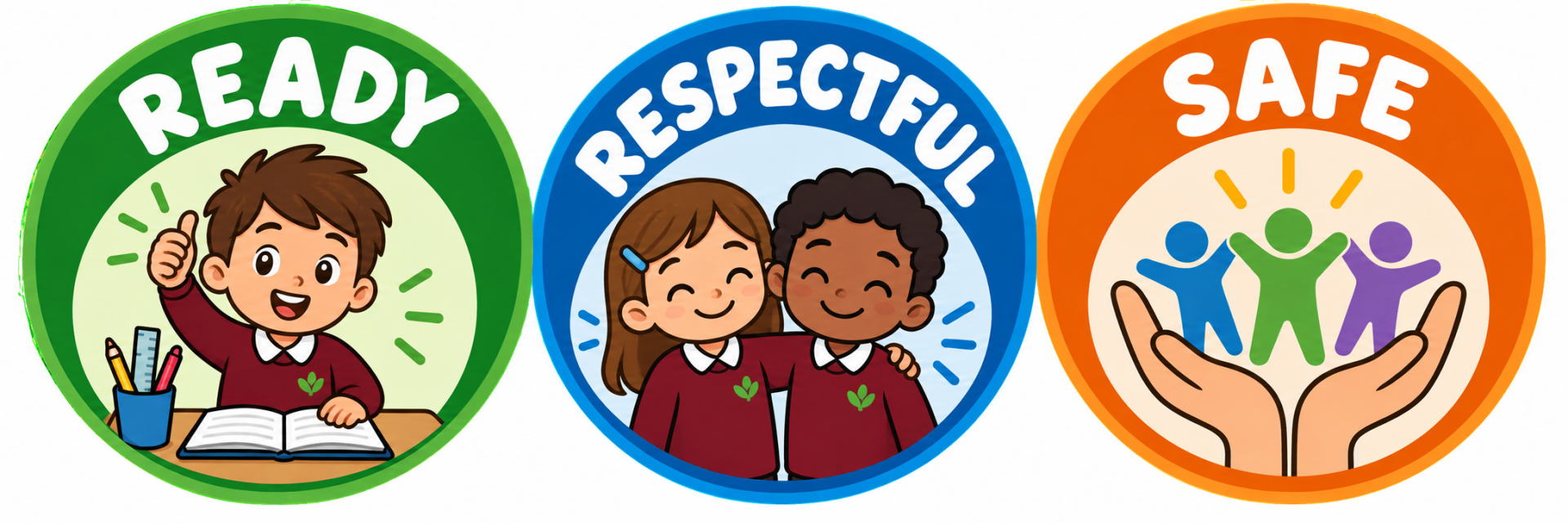
Our three simple behaviour expectations are:
🟢 READY
We are ready to learn.
Being ready means:
- Arriving at school on time.
- Listening and following instructions.
- Being prepared to learn.
- Giving our best effort.
- Being ready to learn from our mistakes.
🔵 RESPECTFUL
We treat ourselves, others and our school with respect.
Being respectful means:
- Speaking kindly and politely.
- Listening when others are speaking.
- Treating everyone fairly.
- Respecting different cultures, beliefs, backgrounds and opinions.
- Looking after our school and its environment.
- Showing good manners.
- Understanding how our words and actions affect others.
🟠 SAFE
We make choices that keep ourselves and others safe.
Being safe means:
- Following school rules and instructions.
- Moving safely around school.
- Keeping our hands, feet and objects to ourselves.
- Telling an adult when we are worried or someone may be unsafe.
- Using equipment appropriately.
- Making sensible choices in lessons, at playtimes and during lunchtime.
Our Approach
At Brambles, we recognise that children are still learning how to manage their emotions, behaviour and relationships.
Our approach is therefore based on teaching and supporting positive behaviour, rather than simply responding to poor behaviour with consequences.
We use a stepped approach. This means that when behaviour does not meet our expectations, children are normally given opportunities to recognise their behaviour and make a different choice.
Our approach looks like this:
1. REMIND
A child is reminded of the expected behaviour and which of our three rules they need to follow.
2. SUPPORT
Where appropriate, an adult helps the child to understand what they need to do differently and gives them an opportunity to make a positive choice.
3. WARNING
If the behaviour continues, the child is given a clear warning that their behaviour is not meeting our expectations and that a consequence may follow.
4. SANCTION
If the behaviour continues or is sufficiently serious, an appropriate sanction may be applied.
5. REFLECT & REPAIR
Following an incident, we provide opportunities for children to reflect on what happened, understand the impact of their behaviour and repair relationships where necessary.
Fair and Consistent
We believe that children need clear and consistent boundaries.
Our expectations apply to all children, and staff work together to ensure that our approach is fair and predictable.
However, fair does not always mean identical.
Some children may need additional support or reasonable adjustments because of their individual needs. Where appropriate, we consider a child's SEND, developmental stage, communication needs, emotional needs and individual circumstances.
Reasonable adjustments may include:
- Additional reminders or prompts.
- Visual supports.
- Additional processing time.
- Support from a trusted adult.
- Movement or regulation breaks.
- Individual behaviour strategies.
- Adaptations to how expectations are communicated.
- Opportunities to regulate before discussing an incident.
These adjustments do not remove expectations. Instead, they help children to access those expectations and develop the skills they need to succeed.
Relationships Matter
At the heart of our behaviour approach are strong relationships.
Children are more likely to make positive choices when they feel known, valued and understood.
Our staff work hard to build positive relationships with children and to recognise and celebrate good behaviour. Praise and encouragement are an important part of everyday life at Brambles.
We want children to know:
"We notice when you make good choices."
"We believe you can do better when things go wrong."
"Making a mistake does not define you."
Reflect and Repair
Sometimes relationships become difficult or behaviour has an impact on another person.
When this happens, we believe it is important that children have the opportunity to reflect and repair.
The purpose of reflection is not to shame a child. It is to help them develop self-awareness, empathy, responsibility and the skills to manage similar situations more successfully in the future.
Where relationships have been damaged, we encourage children to repair and rebuild those relationships.